
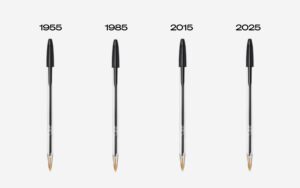
There is something magical about revisiting a classic to see that it has stood the test of time. What makes the E-type Jaguar, or the Chanel little black dress, or the Bic pen stand out from the crowd? It’s not always cost as the design of the Bic pen (as you might have spotted from their marketing campaigns) has not changed since 1955 and it costs less than the price of a cuppa from your corner café.
Is it quality? Is it style? Is it attention to detail? Yes, it is often all three, but it’s also an appreciation of the end user and what they need from the outset.
The British Council for Offices (BCO) have an annual Test of Time award, looking at award-winning projects 5 years down the road to check whether they still have the lustre, still have that certain something that made them eye-catching on Day 1. These projects are not always showy and are definitely never style over substance. They are often just examples of good design where the quality of the fit-out and the attention to detail is unsurpassed.
We’ve often commented in blogs, particularly regarding sustainability, that by making corridors wider, by making rooms more generous, improved accessibility can go hand in hand with increasing the lifetime of a fit-out. More space generally means less wear and tear.
Returning in 2022 to a project we completed in 2016, the office looked on first viewing as fresh and light filled as it was when the BCO judges visited (close, but no cigar sadly). A keen observer (and let’s face it, designers can spot something isn’t quite right with their eyes shut during a power cut) would have noticed one area where office traffic and a tight corner had resulted in higher than normal wear and tear. Corner protectors are fine when you are designing factories or hospitals, but in the reception of an HQ office it’s a no-no.
Thinking of the end users, thinking of patterns of movement in an office and then designing accordingly can go some way towards extending the life of a fit-out. Granted that for almost one third of its life this once bustling office had been incredibly quiet, it maybe gave a slightly artificial perspective of fit-out longevity.
What about another vital part of an office fit-out, the furniture, fixtures & equipment (FF&E)? Specifying higher end products at the outset can seem like a recipe for value engineering, but if we assume a standard office fit-out will be in place for, say, 10-years, is a 25% more expensive item here and there really such a luxury if it still looks brand new (and functions well) a decade later?
An example of ‘you get what you pay for’ is the all-too-common moulded back task chair that has zero reconfigurability. Now you don’t need to spend £1,000 on a Herman Miller task chair, and pre-loved quality furniture is out there if you look, but it often pays dividends to specify quality. The alternative when it comes to FF&E is to buy cheap and replace it often, not sustainable in the long run.
Keeping with revisiting clients, I had the pleasure of visiting another former client recently. This one, a global HQ, was for a private sector client. Yes, the project budget was higher and the FF&E slightly better quality, but the design and layout also started from a foundation of functionality – supporting 2015’s version of agile working. Has it stood the test of time? Yes and no. The quality was undeniably still there in the fit-out, the graphics still popped, the furniture was still comfortable and in good condition, and the client said the technology still worked.
Where it hadn’t stood the test of time was the same as with every project delivered pre-March 2020. It was designed for a different age. It was designed for 5-days a week in the office. It was designed for large meetings with global participants on screen, it was designed for high-profile meetings that needed to be catered professionally. It was designed pre-Teams calls, pre-hybrid working (yes, we know it existed before the pandemic, but bear with me), pre-TW&T peaks. In autumn 2025 it’s sadly lacking the buzz that comes from a full, dynamic office. The magic ingredient missing is people.
With the first project we were able to re-size the office in situ and release space back to the landlord while keeping as much of the existing fit-out as possible – sustainably right-sizing. To remedy the second project will be another challenge altogether. Not impossible though.