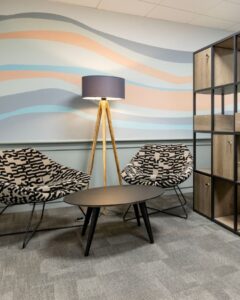

When designing for neurodiversity, designers can take two approaches: designing universal spaces that work for everyone versus creating specifically tailored environments for neurodiverse individuals. Understanding both perspectives is important for designers who want to create truly effective and inclusive environments.
The universal design perspective
This approach treats neurodiversity as a natural variation in human experience rather than a specific condition requiring special accommodation. This idea suggests that everyone is diverse in their own way, and that good design should work for the widest possible range of people.
Designing for neurodiversity is essentially designing for everyone, since the principles that support neurodiverse individuals, such as acoustic control, flexible lighting, and variety in work settings, benefit all users. This approach emphasises creating environments that intuitively support different working styles without requiring users to identify themselves as needing specific accommodations.
The targeted design approach
The targeted approach argues for more specific consideration of neurodiverse needs, recognising that some individuals have particular sensitivities or requirements that might not be adequately addressed by universal design alone. This perspective emphasises understanding specific neurodiverse conditions and designing elements that directly address known challenges.
Finding common ground
Despite their differences, both approaches share common ground. Both recognise the importance of acoustic control, with sound being a major consideration for workplace comfort and productivity. Both acknowledge that visual environments matter, emphasising the need for organised, clutter free spaces with thoughtful colour choices and natural lighting.
Choice appears in both approaches, whether it’s providing universal options that work for everyone or creating specific alternatives for those who need them. Both perspectives also recognise that open-plan offices can be challenging and that variety in work settings is essential.
Should designers create separate quiet zones specifically labeled for neurodiverse users, or should they integrate quiet areas throughout the space for anyone who needs them? Should materials be chosen specifically to avoid potential triggers, or should variety be provided to allow personal choice?
These decisions often come down to organisational culture and individual project requirements. Some organisations prefer clear accommodation strategies, while others favour more integrated approaches. Whatever approach is chosen, it must serve the intended users effectively.
Moving toward integration
The most successful design combines both approaches. It provides the variety and flexibility that universal design recommends, while being informed by the specific insights that targeted design offers. This might mean creating spaces that work well for everyone while being particularly mindful of factors that affect neurodiverse individuals.
The success of any approach depends on its ability to create environments where all users can be productive and comfortable. The goal remains the same for both – workplaces that truly work for everyone.