
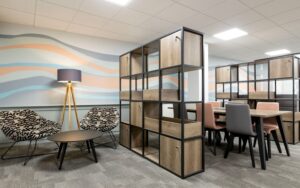
One of the biggest conversations for us throughout the week was around neurodiversity in workplace design, and how it has shifted from accommodation to integration. Forward thinking designers are increasingly recognising that designing for neurodiversity is not a challenge to overcome, but rather a valuable approach to creating environments that function effectively for all individuals.
The most successful neurodiverse design gives users control over their immediate environment without requiring complicated systems.
Our brains are continuously scanning our surroundings—often before we are consciously aware—in an effort to ensure our safety. Because the mind processes information in a highly literal manner, it relies heavily on environmental and social cues to assess potential risks. For instance, having multiple views to the outside and accessible exits reassures our brains that we won’t become trapped or enclosed. Similarly, the presence of adequate and varied sources of light signals that we are unlikely to be left in darkness, further enhancing our sense of security.
Effective neurodiverse design starts with spatial clarity
- Spaces should clearly communicate their intended purpose through visual cues and layout. Using linear design patterns is easier for our brains to process than complicated curved arrangements, making navigation intuitive.
- Natural lighting should be maximised wherever possible, with artificial lighting being adjustable to individual preferences. This doesn’t mean complicated control systems but allowing people to customise their environment by providing options such as desk lamps. and seasonal changes. Our houses don’t remain the same all year round so why should our workplace?
- Colour zoning can help guide people through a space subconsciously, while clear labelling reduces confusion and stress.
Traditional open plan offices come with challenges, with constant noise, visual distractions, and a lack of privacy. The solution isn’t to abandon collaborative spaces entirely, but to create variety within larger areas. Successful design incorporates different zones for different activities. Quiet spaces for focused work, collaborative areas for team projects, and informal meeting spots for quick discussions all serve different needs throughout the day. High-backed chairs, acoustic panels, and soft furnishings can help create psychological boundaries within open spaces, while phone booths and private call areas provide an escape when needed.
The resimercial connection
The resimercial trend toward more residential feeling workspaces naturally supports neurodiverse design principles. Neutral colour palettes, softer lighting, comfortable furniture, and textured materials create environments that feel less institutional and more welcoming. However, this requires careful consideration since sensitivity to different textures varies among individuals. The key is providing variety so people can choose what works best for them.
When designed thoughtfully, neurodiverse-friendly workspaces benefit everyone. By focusing on these fundamental human needs rather than trying to accommodate specific diagnoses, we create more inclusive and effective work environments that support productivity and wellbeing for all users.