
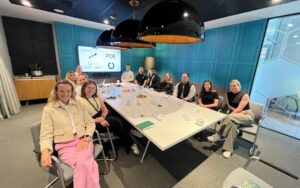
From nice-to-have to must-have
The conversation opened with Utopi’s approach to sustainability data, using IoT sensors to monitor everything from energy consumption to tenant behaviour patterns. Falk explained how their technology can identify issues ranging from design flaws to simple problems like tenants leaving heating on overnight. What struck the group was his observation that sustainability remains a “tick box exercise” until clients see tangible savings, something everyone could relate to.
The shift in client attitudes became a central theme throughout the discussion. Where sustainability once appeared as an afterthought in proposals, participants reported clients now leading these conversations. Ryan mentioned that he recently spoke to a client who shared how a client recently suggested rainwater capture and solar panels, demonstrating how the landscape has evolved, where on this occasion it was the client who was aware of these energy saving schemes, and wanted this to be considered in their new design. This change isn’t just about environmental responsibility, it’s become commercially essential. Buildings without green credentials are struggling to attract tenants, with BREEAM certification now considered a minimum requirement rather than a bonus.
No new spades in the ground
Despite this growing demand, the group acknowledged significant barriers to sustainable development. Construction costs have reached levels where new office developments have essentially stopped in cities like Glasgow. This creates a challenging cycle: how do you invest in making existing buildings greener when there’s barely budget for basic construction? The focus has necessarily shifted toward retrofitting and upgrading existing buildings rather than building new sustainable spaces.
The discussion revealed interesting nuances around different building types and budgets. While larger developments can afford full BREEAM certification, smaller buildings often take more thoughtful, localised approaches to sustainability. One participant said for example, sourcing local materials within a certain distance of the project or choosing “BREEAM In-Use” certification could be a more affordable alternative that delivers similar outcomes.
Regulation creating waste
One of the more eye-opening moments came when discussing regulatory requirements that inadvertently create waste. The group highlighted how CAT A refurbishment standards require developers to install certain features like ceilings and partitions, only for incoming tenants to rip them out for design reasons or to accommodate meeting rooms. This regulatory framework, designed with good intentions, often results in materials being installed and immediately discarded.
However, there was optimism around the circular economy approach. Several attendees work with companies that specialise in reusing office equipment and materials. The key insight was extending the lifecycle of materials rather than defaulting to new installations.
The people perspective
Beyond the technical and financial aspects, the roundtable explored sustainability from an employee perspective. Legal professionals in the group noted that people increasingly want to work for companies with genuine environmental values, while clients expect their service providers to demonstrate sustainable practices. This creates a ripple effect where sustainability becomes part of competitive advantage in recruitment and client retention.
The discussion also touched on the importance of education and early engagement. Too often, sustainability consultants are brought in late in the development process when options are limited and costs are higher. The most successful projects involve sustainability specialists from the planning stages, allowing for more cost effective solutions that integrate seamlessly with the overall design.
What’s next
As the session wrapped up, participants agreed that the property sector needs to think beyond current regulations and immediate requirements. The challenge lies in anticipating what sustainability will look like in three to five years rather than just meeting today’s standards. This forward thinking approach requires collaboration between all stakeholders – from developers and landlords to tenants and regulatory bodies.
The overarching message was clear: sustainability is no longer optional in commercial property. While implementation challenges remain significant, the shift in client expectations and market demands has made environmental responsibility a commercial imperative. Success lies in early planning, lifecycle thinking, and recognising that sustainable choices often create more comfortable, cost effective buildings rather than compromising on quality or budget.